
Culinary travel has emerged as one of the most sophisticated segments of UHNW leisure: the combination of a private jet's scheduling flexibility and the concentration of world-class gastronomy in specific regions creates possibilities unavailable to commercial travellers. A table at Noma, El Celler de Can Roca, or Le Bernardin requires reservation lead times of 6-18 months; if the booking falls on a Tuesday in Copenhagen, a Wednesday in Girona, and a Thursday in New York, a private jet makes all three possible within a single week. The culinary travel circuit, structured around Michelin three-star restaurants, premier wine estates, artisanal food producers, and the world's finest food markets, represents one of the most intellectually and sensorially rich uses of private aviation.
The Michelin Three-Star Circuit: Europe
Europe's concentration of Michelin three-star restaurants creates a circuit that private jet clients uniquely position to experience in depth. The Nordic cluster, Noma (Copenhagen, EKCH), Geranium (Copenhagen), Maaemo (Oslo, ENGM), and Frantzén (Stockholm, ESSA), requires 3 separate capital-city visits, each a 1h15-1h45 jet sector from London or Paris. The Spanish cluster, El Celler de Can Roca (Girona, LEGE), Disfrutar (Barcelona, LEBL), Mugaritz (San Sebastián, LESO), Arzak (San Sebastián), Martín Berasategui (Lasarte-Oria, LESO), concentrates 9 three-star restaurants within a 150-kilometre coastal strip between Catalonia and the Basque Country. Girona Airport (LEGE), 15 minutes from the Roca brothers' restaurant, handles private jets up to the Challenger 350 category; San Sebastián Hondarribia Airport (LESO) accepts jets up to the Falcon 50 category, with Bilbao (LEBB), 100 km, as the alternate for larger aircraft.
The French cluster concentrates along specific axes: Paris (Guy Savoy, Le Grand Véfour, L'Astrance, now closed but contextually important, Alain Ducasse au Plaza Athénée), Normandy and Brittany (Maisons de Bricourt, Patrick Jeffroy), and the Lyon-Provence corridor (Paul Bocuse Institut's legacy restaurants, Pic in Valence, Troisgros in Roanne). Lyon-Saint-Exupéry Airport (LFLL) serves as the hub for the Burgundy wine region and the Rhône Valley gastronomic axis; Valence TGV connects to Paris in 2 hours for the Pic dinner, but a private jet sector from Paris to Valence-Chabeuil (LFLU) takes 45 minutes and avoids the train.
Wine Regions: Bordeaux, Burgundy, Tuscany, Napa
The world's premier wine regions are typically not served by major commercial airports, but all have private aviation infrastructure sufficient for midsize jet access. Bordeaux-Mérignac (LFBD) is the gateway to the Médoc châteaux: Pauillac, Saint-Julien, Saint-Estèphe, and Margaux are all within 50 km, and private château visits, including barrel tastings in the chai, hosted by the technical director or the château owner, are available to clients of FFGR Jets' preferred wine broker. Burgundy's Dijon-Bourgogne Airport (LFSD) handles jets up to the Falcon 900 category; the Côte de Nuits (Gevrey-Chambertin, Vosne-Romanée, Nuits-Saint-Georges) and Côte de Beaune (Meursault, Puligny-Montrachet, Chassagne-Montrachet) are 15-30 minutes south.
Tuscany's wine circuit, Brunello di Montalcino, Barolo in Piedmont, Chianti Classico, is accessed via Florence Peretola (LIRQ), Pisa (LIRP), or Siena (LIQS). Siena's airport accepts small turboprops and light jets, placing it closest to the Chianti and Brunello production zones. The California wine circuit, Napa Valley and Sonoma, is accessed via San Francisco (KSFO) or Oakland (KOAK), with Charles M. Schulz Sonoma County Airport (KSTS) at 30 minutes from the Russian River Valley AVA serving private jets up to the Challenger 350 category. FFGR Jets coordinates tasting itineraries with Domaine de la Romanée-Conti (Burgundy), Pétrus (Bordeaux), Sassicaia (Bolgheri), and Opus One (Napa), all of which receive private visitors by prior arrangement through the appropriate channels.
On-Board Culinary Excellence
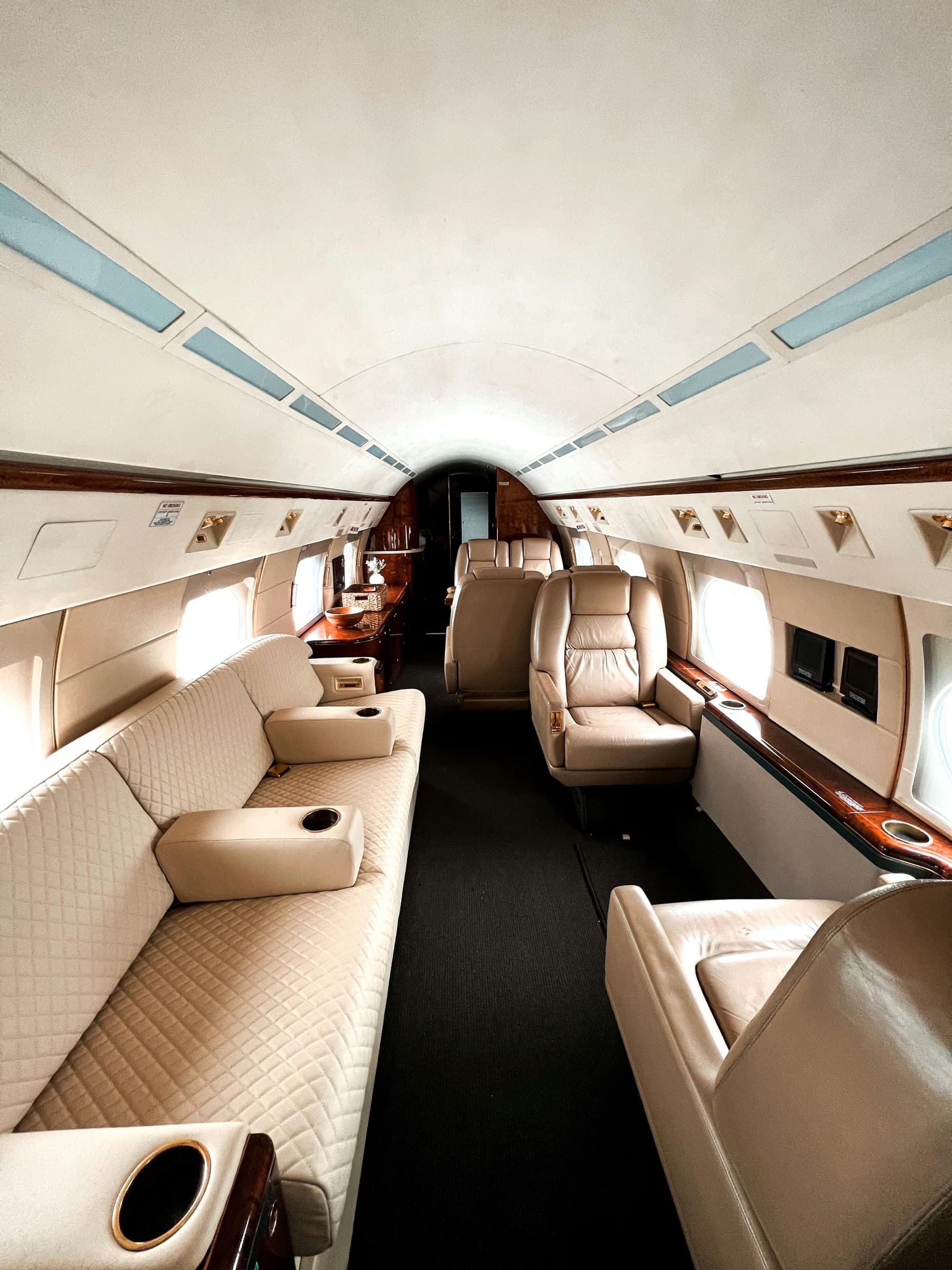
The culinary travel experience extends to the aircraft cabin: FFGR Jets' catering partnerships with Paris traiteurs and Michelin-starred caterers enable meal service on board that matches the quality of the ground dining programme. For a France-to-Japan culinary charter, the departure meal from Paris is prepared by a traiteur in the tradition of Parisian haute cuisine; the arrival into Tokyo is preceded by a Japanese-style bento service created by a Tokyo caterer and loaded at the transit airport. The in-flight meal is not an afterthought, it is the first chapter of the culinary experience, setting the palate and the mood for what follows on the ground.
The wine service on culinary charter flights is designed in collaboration with the client's personal sommelier or with FFGR Jets' wine partner at Hédiard Paris. For a Bordeaux wine tour, the aircraft cellar includes verticals of the client's preferred châteaux; for a Japanese culinary circuit, sake and shochu curated by a Tokyo specialist complement the Japanese meal service. The aircraft's temperature-controlled wine storage (8-15°C, vibration-minimised) ensures that bottles arrive in perfect condition regardless of the flight duration. Culinary travel clients consistently rate the in-flight dining experience as a component equal to the ground programme in their overall assessment of the charter.
Design Your Culinary Charter
Or by email: contact@ffgrjets.com