
The private jet cabin is the product, the space where the charter client spends the hours between departure and arrival, and where the quality of the aviation experience is ultimately determined. Cabin design varies enormously across the private aviation fleet: the interior of a Cessna Citation CJ3+ is a functional 4-seat day cabin, while the Bombardier Global 7500's Nuage suite is a dual-zone, four-compartment flying residence with a dedicated crew rest area, a full kitchen galley, and a master bedroom with a full-flat bed. This guide explains the key cabin variables, seating configurations, sleeping arrangements, connectivity, noise levels, and customisation options, that differentiate aircraft categories and inform the selection process for discerning charter clients.
Light Jet Cabins: Functionality Over Luxury
Light jet cabins, the Citation CJ3+, Phenom 300E, and HondaJet Elite S represent the category, are optimised for day flights of 2-4 hours with 4-6 passengers. The cabin width of the Phenom 300E is 1.47 metres at shoulder level; the stand-up headroom is 1.52 metres (most light jets do not permit full stand-up within the cabin). Seating typically follows a club-4 configuration (two forward-facing pairs facing each other) or a forward-only configuration with a rear divan. The Phenom 300E, consistently the world's best-selling private jet, manages this cabin format better than any competitor: its cabin width is the narrowest in its class, but Embraer's interior design, leather seating with memory foam, individually adjustable lighting, and a 100% fresh air ventilation system rather than recirculated air, sets the quality benchmark for the category.
For overnight flights on light jets, the diavan or rear bench can be configured as a sleeping surface, though the width (typically 50-55 cm) limits this to a lateral sleeping position rather than the full-flat experience of larger aircraft. Light jet connectivity has improved significantly: most current-generation light jets offer Wi-Fi via Inmarsat SwiftBroadband or Iridium Certus, with download speeds of 1-3 Mbps, adequate for email and light video calls, insufficient for high-definition video streaming on transatlantic sectors. The Citation CJ3+ and HondaJet Elite S carry supplemental oxygen for cabin pressurisation emergencies, with cabin altitude typically maintained at 6,000-8,000 feet during cruise, slightly lower than commercial airline cabin altitude (8,000 feet maximum) but noticeably higher than ultra-long-range cabins (4,500-5,500 feet on Global 7500).
Midsize and Super-Midsize Cabins: The Working Jet
Midsize jets, Hawker 900XP, Citation XLS+, Learjet 75 Liberty, and super-midsize jets, Challenger 350, Citation Latitude, Gulfstream G280, represent the category most frequently used for intra-European and transatlantic supplemental flights. The defining advantage of the super-midsize category is stand-up cabin height: the Challenger 350 cabin is 1.83 metres tall, enabling full cabin walk-through and a more residential feeling on 4-7 hour sectors. The Challenger 350 cabin width (2.18 metres) and length (7.17 metres) support a club-4 forward section and a divan aft configuration, the divan converts to a sleeping surface approximately 1.85 metres long, adequate for most passengers.
Connectivity in the super-midsize category has advanced to Ka-band satellite communication on newer aircraft (the Challenger 350's optional Gogo AVANCE L5 system delivers 15-25 Mbps download, enabling full video conferencing and streaming). The Citation Latitude's flat-floor cabin, all seats at the same height, no wheel well intrusion, and its class-leading cabin altitude (5,965 feet at maximum cruise altitude) make it the most physiologically comfortable midsize option for passengers sensitive to cabin altitude effects. FFGR Jets uses the Challenger 350 as its preferred recommendation for 4-7 passenger European sectors and the Citation Latitude for clients prioritising cabin altitude and noise levels.
Heavy Jets: The Meeting Room in the Sky
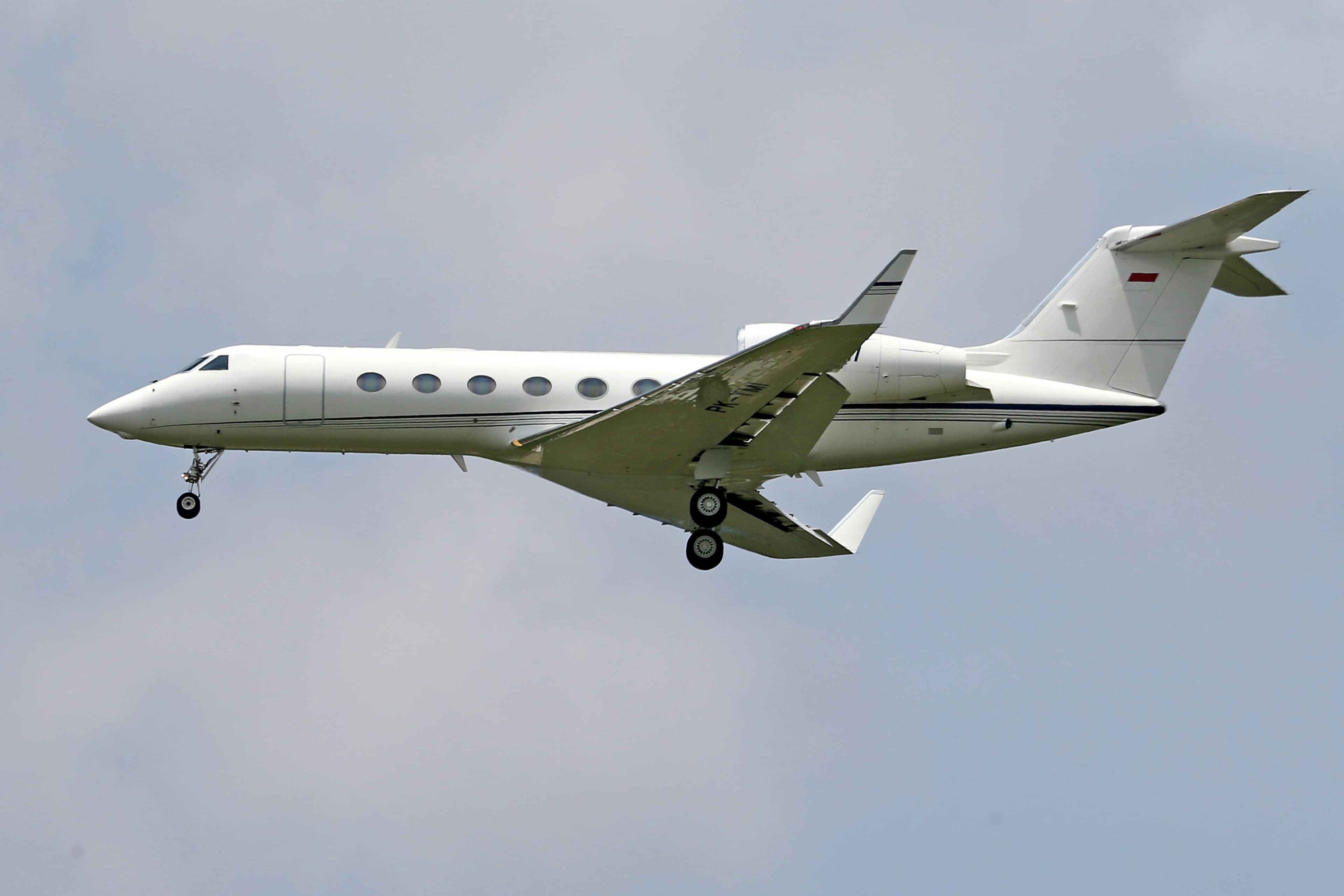
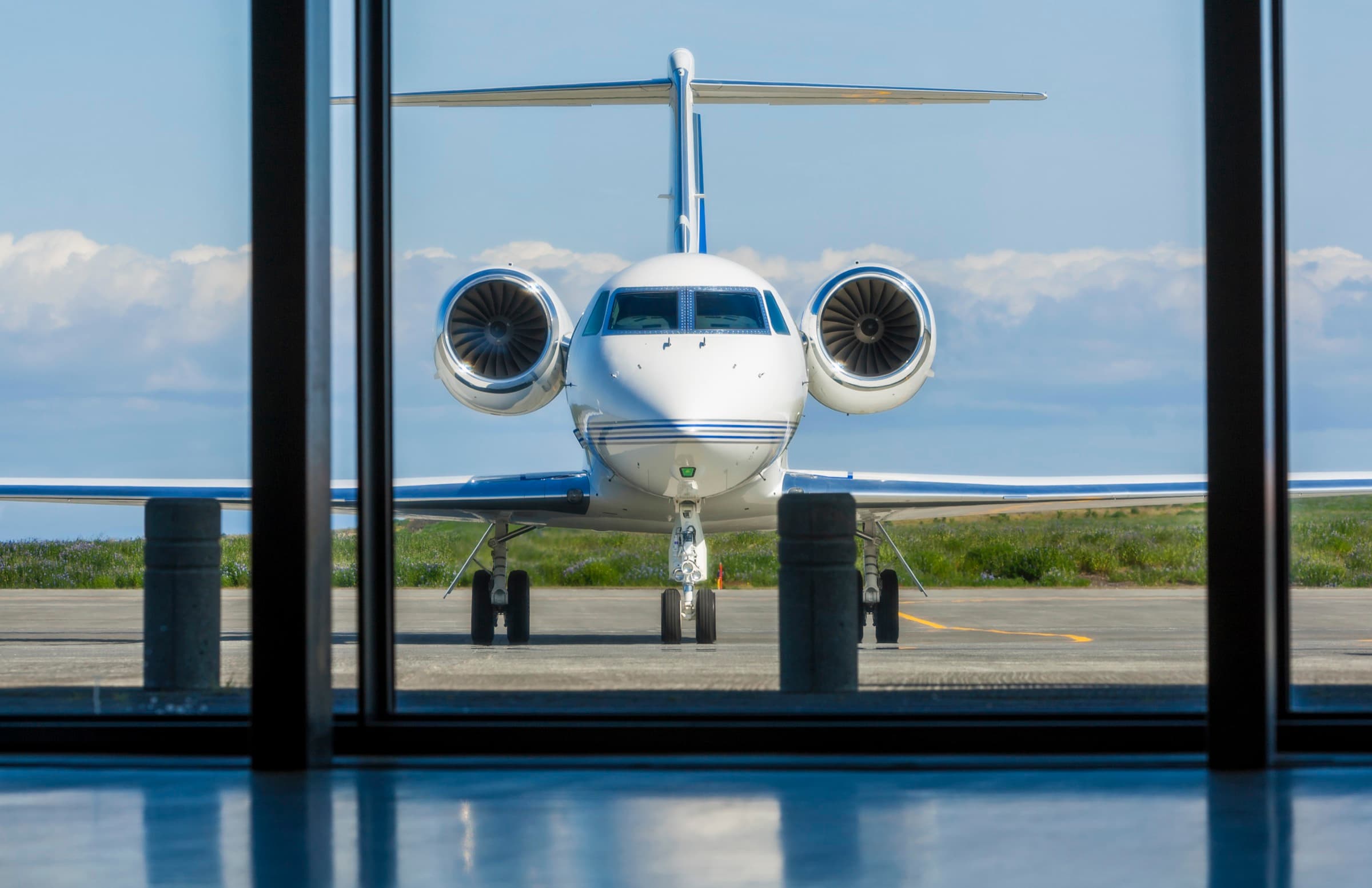
Heavy jets, Gulfstream G550, Falcon 7X, Falcon 900LX, are designed for intercontinental flights with 8-12 passengers, and their cabins reflect this purpose: multiple seating zones, galley with hot meal preparation capability, and sleeping configurations for 2-4 passengers simultaneously. The Gulfstream G550's cabin (4.9 metres wide, 13.5 metres long) typically divides into three zones: a forward club-4 for in-flight meetings and work; a mid-cabin lounge/divan area for informal conversation and rest; and an aft cabin with additional seating or a sleeping configuration. The G550 is the most configurable heavy jet in current production: bespoke completions from Gulfstream's Savannah facility can produce virtually any interior arrangement within the structural constraints.
The Dassault Falcon 7X and 900LX are the preferred alternative to Gulfstream for French-registered clients and for routes requiring low-noise operations at sensitive airports (both Dassault Falcons have exceptionally quiet engines that enable access to noise-restricted airports including London City Airport and Nice). The Falcon 7X's three-engine configuration (Pratt & Whitney Canada PW307A) enables an ETOPS-equivalent safety margin on overwater operations that some clients prefer for Atlantic crossings. Connectivity on the Falcon 7X includes Dassault's FalconCabin HD+ system, which integrates Ka-band internet with the cabin entertainment system.
Ultra-Long-Range Cabins: The Flying Residence
The Bombardier Global 7500 and Gulfstream G700 represent the current pinnacle of production private jet cabin design. The Global 7500's Nuage suite configuration, named after Bombardier's patented Nuage seat, divides the 16.2-metre cabin into four distinct zones: a forward living room with club seating and a 43-inch screen; a conference suite with a four-person dining/meeting table; a private suite with a full-flat bed (2.03 metres, 186 cm width in the master bedroom zone); and a dedicated crew rest area with a separate berthing. The cabin altitude of the Global 7500 at maximum cruise altitude is 4,500 feet, the equivalent of sea level pressure experienced in a city at 1,370 metres altitude, or roughly equivalent to the altitude of Denver, Colorado. In practice, passengers sleeping on Global 7500 overnight sectors arrive significantly less fatigued than on comparable commercial first-class routes.
The Gulfstream G700's Signature cabin, launched in 2024, introduces the longest cabin in Gulfstream's history (16.5 metres) with an Ultragalley forward of the main cabin, five zones (including a master suite with a dedicated bathroom), and Gulfstream's patented oval cabin cross-section that maximises usable cabin width without increasing fuselage diameter. Both aircraft offer Ka-band connectivity with download speeds of 50+ Mbps, comparable to home broadband, enabling full video conferencing, 4K video streaming, and cloud computing operations anywhere on the global route network. For clients whose intercontinental travel requires maximum productivity, the G700 or Global 7500 represents the most capable airborne workspace currently available in the charter market.